How to practise Estonian B1 speaking between lessons
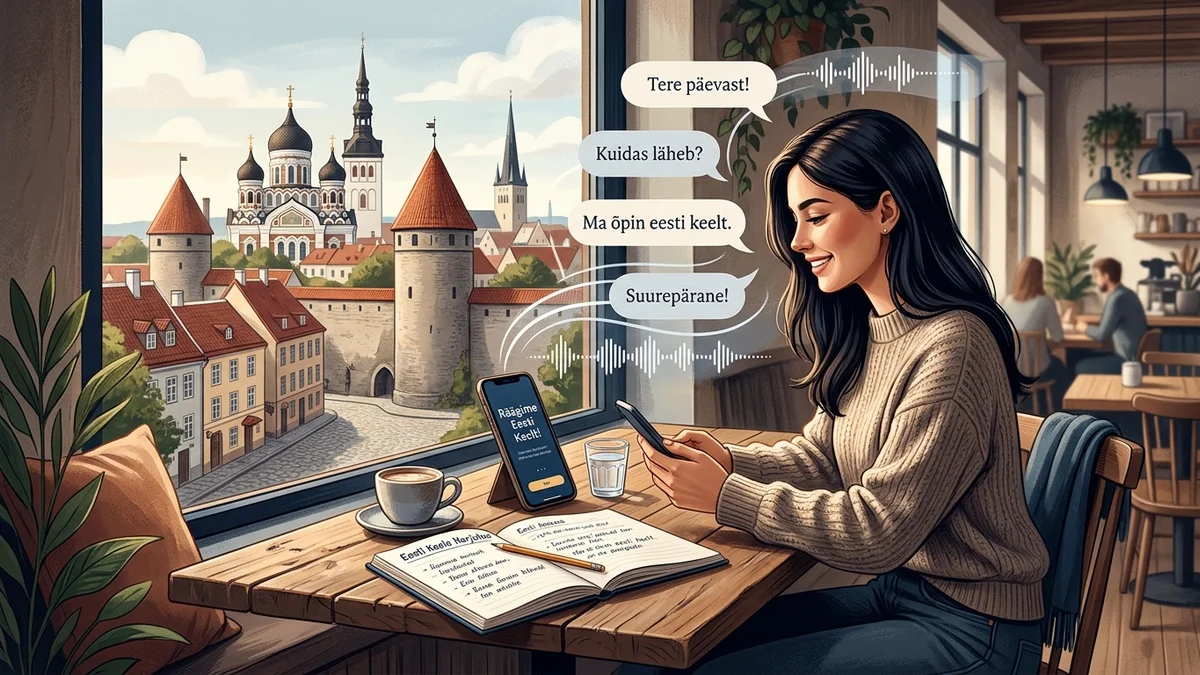
To practise Estonian B1 speaking between lessons, rehearse familiar situations: answer a question, explain a preference, ask for information and reach an agreement with another person. Try an answer before reading a model, review one correction, then repeat the task with a different detail.
Note: The exercises below are original practice material. They are not HARNO exam questions, transcripts of learners or evidence of an exam result. Edyssey is an independent learning app and is not affiliated with HARNO.
Start with the official speaking tasks
HARNO's Estonian language proficiency exam information describes B1 speaking as questions and discussion followed by dialogue tasks. Its B1 description includes reaching a decision with a partner and exchanging information by telephone with an institution. Use the official B1 description and sample materials linked there when checking the format; a generic language-app exercise is not a substitute.
The Council of Europe's CEFR self-assessment grid describes B1 spoken interaction in terms of familiar topics and situations encountered while travelling. For spoken production, it includes describing experiences and giving brief reasons for opinions and plans:
- Spoken interaction: Proposing plans, reacting to constraints, asking for information and confirming mutual decisions.
- Spoken production: Describing daily experiences, explaining preferences with sest (because), and keeping conversation flowing with clarification phrases.
Exercise 1: answer, then add a reason
Start with an everyday question:
Prompt: “Mida sulle meeldib vabal ajal teha?”
(What do you like doing in your free time?)
A natural B1 answer should state a preference and immediately back it up with a reason:
Model response: “Mulle meeldib jalutada, sest ma saan värskes õhus olla.”
(I like walking because I can be outdoors.)
Use something that is true for you. Then ask a follow-up question, such as:
Follow-up: “Kas sa jalutad iga päev?”
(Do you walk every day?)
Answer without returning to the original model sentence.
Common grammar pitfall
❌ “Mina meeldib jalutada”
✅ “Mulle meeldib jalutada”
In Estonian, the construction requires the allative case (mulle — literally "to me it pleases"), not the nominative mina.
Try the same pattern with another activity: “Mulle meeldib lugeda, sest see aitab mul lõõgastuda.” (I like reading because it helps me relax.)
Exercise 2: agree on a plan
Practise choosing an activity with a partner. Here is a realistic dialogue where both speakers must reach a compromise:
- A: Kas lähme laupäeval parki või kohvikusse? (Shall we go to the park or a café on Saturday?)
- B: Mina eelistaksin parki, sest tahan väljas olla. (I would prefer the park because I want to be outside.)
- A: Aga kui vihma sajab? (But what if it rains?)
- B: Siis võime kohvikusse minna. Kas sulle sobib kell kaks? (Then we can go to a café. Does two o'clock suit you?)
- A: Jah, sobib. Kohtume kell kaks. (Yes, it does. Let's meet at two.)
Now change the day, time or activity. Give your partner a different preference so you have to respond rather than recite both sides. The task is to reach an agreement: propose something, react to the other person's suggestion and confirm the plan.
Exercise 3: ask an institution for information
Imagine calling a local library about joining. Prepare what you need to find out, then practise asking:
- Tere! Sooviksin raamatukogu lugejaks registreeruda.
(Hello! I would like to register as a library reader.) - Milliseid dokumente mul vaja on?
(Which documents do I need?) - Mis kell te laupäeval avatud olete?
(What time are you open on Saturday?) - Kas saaksite seda korrata?
(Could you repeat that?)
Have your practice partner invent the answers, then explain what you understood. Those answers are for the roleplay only; check the real library's website before visiting. In a second round, call a different institution (a sports centre, a clinic or a city office) and change the information you need.
Keep clarification phrases ready
In spoken interaction, you do not need to panic when you miss a word. Staying in the conversation by asking for clarification is a core B1 competency:
- Palun rääkige aeglasemalt. (Please speak more slowly.)
- Mida see sõna tähendab? (What does that word mean?)
- Kas te saaksite tuua näite? (Could you give an example?)
- Kas ma sain õigesti aru, et kohtume kell kaks? (Did I understand correctly that we are meeting at two?)
Use one of these phrases during practice, then return to the task. Asking for clarification is always more useful than silently agreeing to a plan you did not understand.
A short practice routine
- Pick one situation: Choose one exercise above and make an initial attempt without a script.
- Review one correction: Focus on one change that changes the meaning or helps you complete the task (e.g. mulle meeldib instead of mina meeldib).
- Vary the details: Repeat immediately with a different detail (change the time, place, weather, or objection).
- Self-check: Note whether you answered the question, gave a clear reason (sest...), and responded to your partner's constraint.
You can record yourself for comparison, keeping recordings private unless everyone involved agrees to share them. Compare what you managed to communicate rather than treating a smoother recording as proof of an official CEFR level.
A recorded app example: weekend plans
This 30-second Android app recording shows a prepared weekend-plans scenario, with Estonian practice and an English interface. The scenario was set up for the demonstration; this is a recorded app interaction, not a learner study or an official exam task.
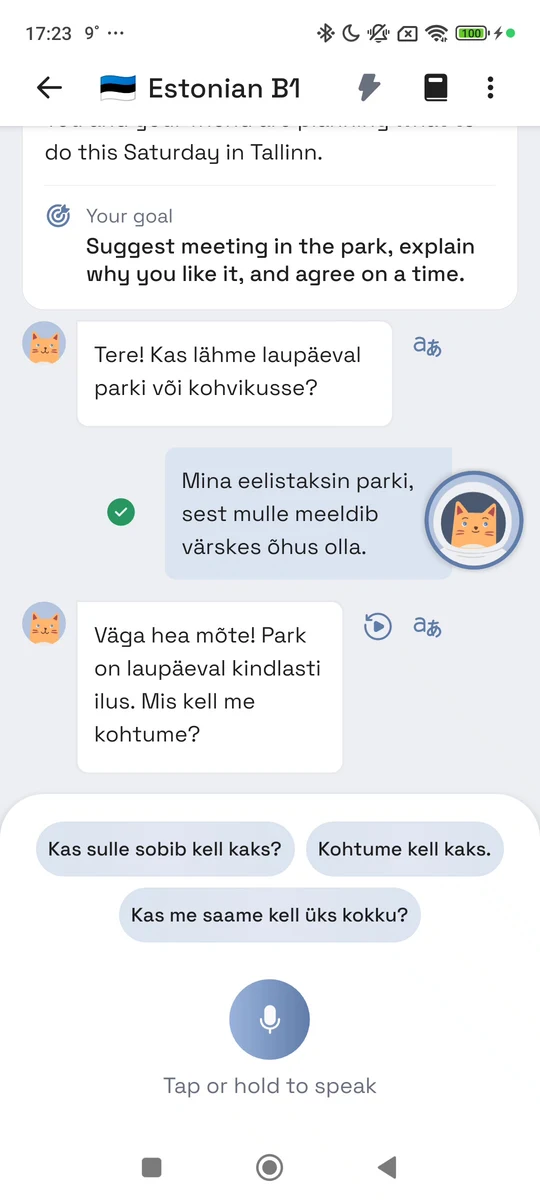
The exchange visible in the recording is:
- Tutor: Tere! Kas lähme laupäeval parki või kohvikusse? (Hi! Shall we go to the park or a café on Saturday?)
- Learner: Mina eelistaksin parki, sest mulle meeldib värskes õhus olla. (I would prefer the park because I like being outdoors.)
- Tutor: Väga hea mõte! Park on laupäeval kindlasti ilus. Mis kell me kohtume? (A very good idea! The park will surely be beautiful on Saturday. What time shall we meet?)
The clip also shows opening the translation of Kas sulle sobib kell kaks? It does not show the pair completing an agreement. To continue the exercise yourself, propose a time, then change it when your partner says it does not suit them. The app's green check is feedback on that attempt, not proof of B1 proficiency.
Using Edyssey for additional practice
If you do not always have a practice partner available between lessons, Edyssey lets you practise speaking out loud on your phone:
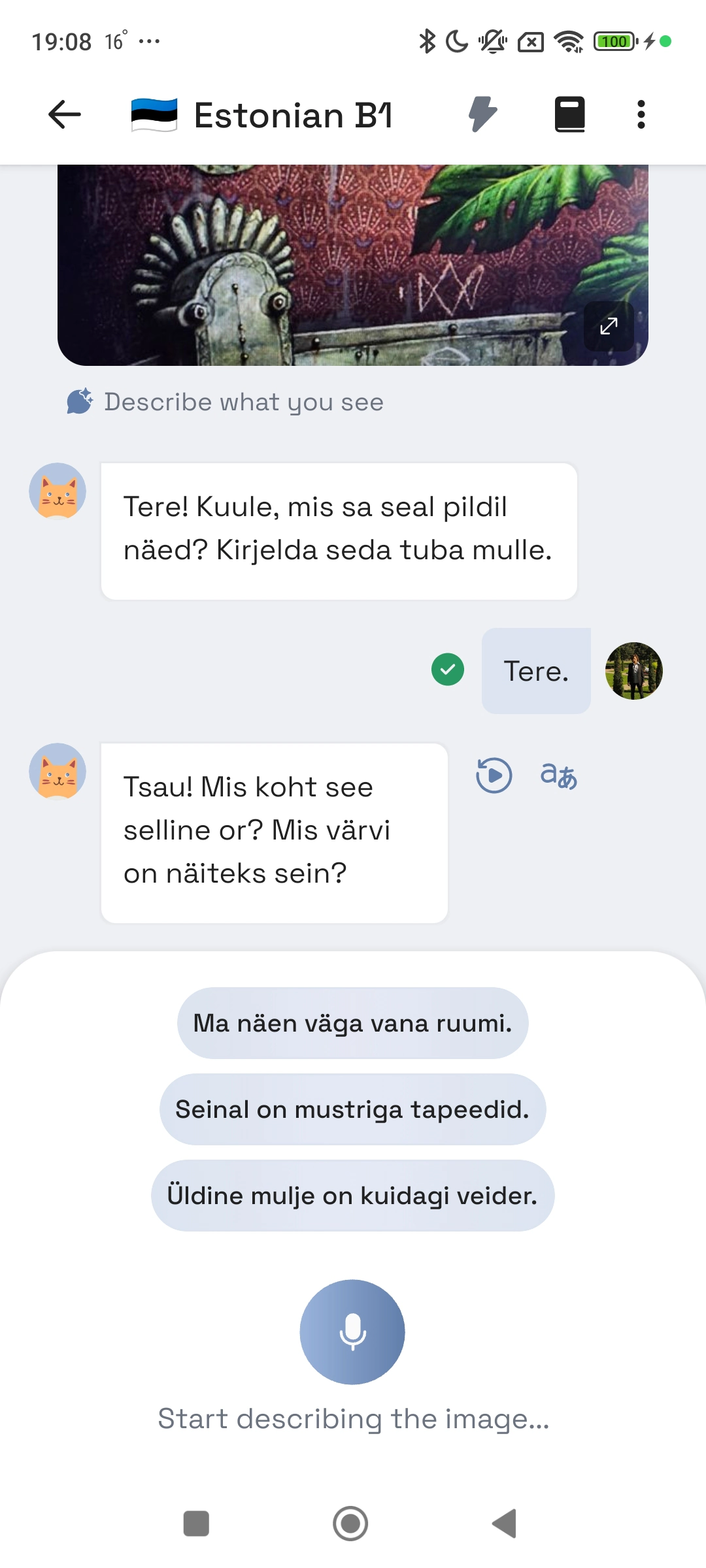
- Speak out loud: Instead of just tapping multiple-choice buttons, you speak your responses using voice input, training your brain to formulate sentences under natural pressure.
- Contextual roleplays: Rehearse realistic B1 situations—such as agreeing on weekend plans, ordering at a café, or describing scenes in Tallinn.
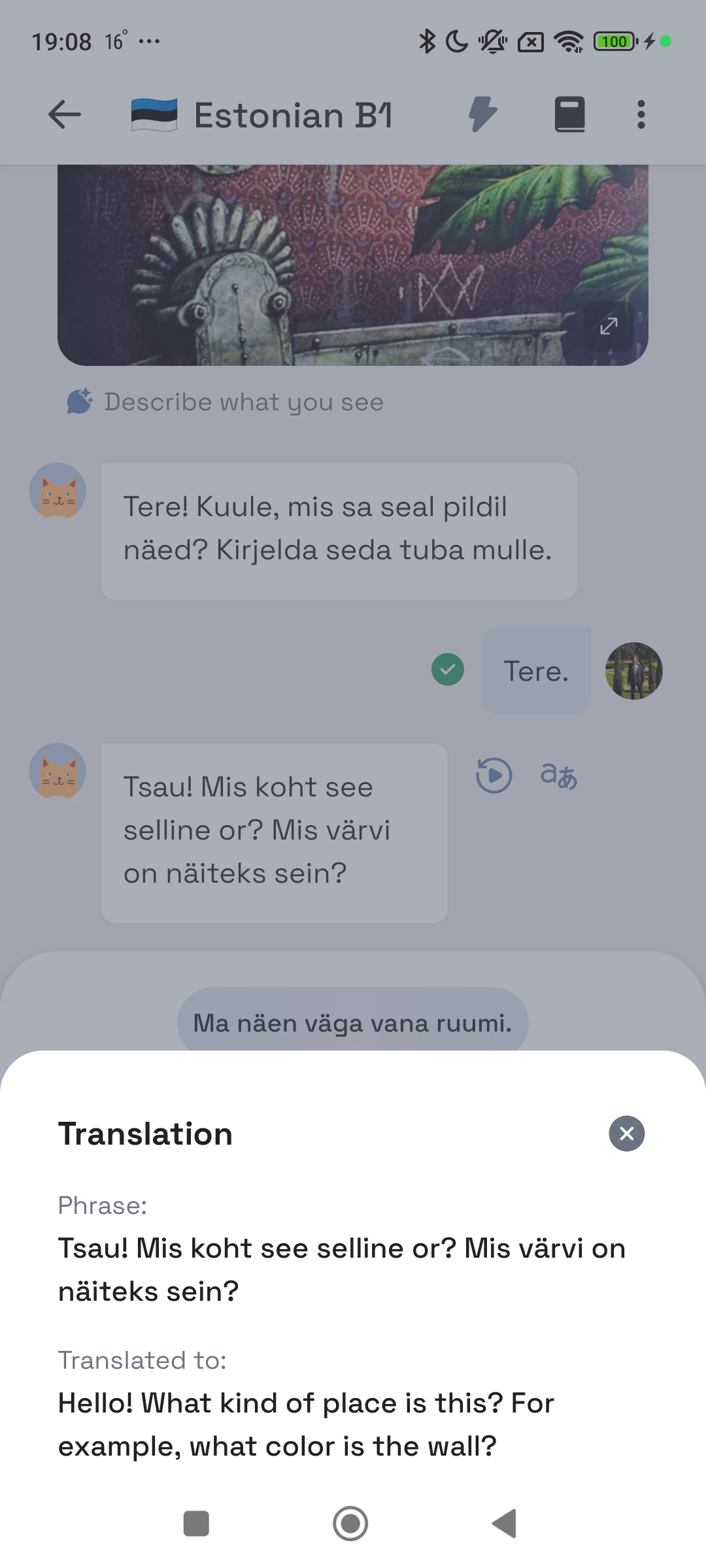
- On-demand vocabulary & grammar breakdown: Tap any phrase mid-conversation to inspect word definitions and grammatical explanations in English.
Activities and tutor responses are generated; the app does not promise this exact dialogue or an official B1 mock exam. AI can mishear speech and make language mistakes. Bring uncertain corrections to your teacher or check a reference such as the Institute of the Estonian Language's Sõnaveeb.
See Edyssey's Android and iOS download options. AI features require an internet connection and voice practice requires microphone permission. Check the current offer in the app or your store before subscribing.
What this practice does not cover
The B1 exam also assesses skills beyond speaking, including reading, listening comprehension and formal writing. Keep working with official materials and your teacher on the other parts. AI practice can give you another opportunity to speak between lessons; it cannot certify your level, predict your official score or guarantee a pass.
Exam information checked against HARNO on 19 October 2026. Confirm the current instructions and sample materials on HARNO's website before preparing for an exam date.